
Genesis, the foundational book, unveils creation, humanity’s fall, and God’s covenants—explored through diverse commentaries and study guides for deeper understanding.
A. Overview of Genesis: The First Book
Genesis, meaning “origin,” serves as the biblical foundation, narrating the world’s beginnings and humanity’s relationship with God. This initial book lays the groundwork for the entire biblical narrative, spanning from creation to the establishment of the Israelite nation’s ancestors.
It’s broadly divided into two main sections: the Primeval History (chapters 1-11), detailing creation, the fall, the flood, and the Tower of Babel, and the Patriarchal History (chapters 12-50), focusing on Abraham, Isaac, Jacob, and Joseph.
Study guides emphasize understanding Genesis as a theological account, exploring themes of covenant, sin, and God’s sovereignty. Commentaries, like Westermann’s, offer in-depth analysis of specific narratives, such as Joseph’s story, enriching comprehension.
B. Authorship and Date of Composition
Traditionally, Moses is considered the author of Genesis, though modern scholarship suggests a more complex process. The text likely evolved through oral traditions and written sources compiled over centuries. Determining a precise date of composition remains challenging.
Scholars propose a range spanning from the 15th to the 6th century BCE, with final editing potentially occurring during the Babylonian exile. Philo of Alexandria’s commentaries (1st century CE) demonstrate early engagement with the text, indicating its established status.
Study guides often acknowledge the debated authorship, focusing instead on the theological message and literary structure. Understanding the historical context aids interpretation, but doesn’t diminish the book’s enduring spiritual significance.
C. Genre and Literary Style
Genesis blends various literary genres, including narrative history, poetry, genealogy, and legal codes. It’s not a modern historical account, but rather a theological presentation of origins. Ancient Near Eastern literature provides comparative context, revealing shared motifs and unique perspectives.
The style employs vivid imagery, symbolic language, and recurring patterns. Study guides highlight the importance of recognizing these literary devices for accurate interpretation. For example, genealogies aren’t merely lists of names, but convey theological significance.
Philo of Alexandria’s allegorical approach demonstrates one interpretive tradition. Understanding the genre is crucial for avoiding literalistic readings and appreciating Genesis’s multifaceted message.

II. The Primeval History (Genesis 1-11)
Chapters 1-11 detail creation, the fall, early civilizations, and the spread of humanity— foundational narratives explored in study guides for theological insight.
A. Creation Account (Genesis 1-2)
Genesis 1-2 presents a majestic depiction of God’s creative power, establishing the cosmos and life itself. Study guides emphasize the structured six-day creation, culminating in rest.
Key themes include God’s sovereignty, order emerging from chaos, and the inherent goodness of creation. Examining Genesis 1:26-27, commentaries delve into the profound meaning of humanity being created “in God’s image,” exploring implications for human dignity and responsibility.
These initial chapters lay the groundwork for understanding God’s relationship with creation and humanity, prompting reflection on purpose, origins, and the divine-human connection. Resources aid in dissecting the literary style and theological weight of these foundational verses.
The Six Days of Creation
Genesis 1 details God’s creation over six days, each marked by divine pronouncements: light, sky, land, vegetation, sun/moon/stars, sea creatures/birds, and land animals—culminating in humanity. Study guides highlight the deliberate order and progression, showcasing God’s intentionality.
Commentaries explore the literary structure, noting the repetitive phrase “And God said,” emphasizing divine authority. Discussions often address the debate surrounding the “days” – literal 24-hour periods or symbolic epochs.
Understanding this account requires considering its theological purpose: establishing God as the ultimate Creator and demonstrating the goodness of all He made. Resources offer insights into interpreting this foundational narrative within its ancient Near Eastern context.
The Creation of Humanity – Image of God (Genesis 1:26-27)
Genesis 1:26-27 declares humanity’s creation “in the image of God,” a pivotal concept explored extensively in study guides. This imago Dei isn’t physical resemblance, but reflects God’s attributes – reason, creativity, morality, and relational capacity.
Commentaries delve into interpretations, suggesting the image encompasses dominion over creation, reflecting God’s sovereignty, and the capacity for fellowship with Him. Discussions analyze the implications for human dignity and value.
Resources emphasize that being created in God’s image carries responsibility – stewardship of the earth and ethical conduct. Understanding this concept is crucial for grasping the biblical view of human nature and purpose.
B. The Fall of Man (Genesis 3)
Genesis 3 details the pivotal event of the Fall, a cornerstone of biblical theology, thoroughly examined in study guides. The serpent’s deception leads Adam and Eve to disobey God’s command, resulting in sin entering the world.
Commentaries explore the symbolism of the forbidden fruit and the consequences of disobedience – shame, alienation from God, and the introduction of suffering and death. Resources highlight the disruption of the original harmony.
Study materials emphasize that the Fall isn’t merely a historical event, but a paradigm for human rebellion and the need for redemption. It sets the stage for God’s plan of salvation.
C. Cain and Abel (Genesis 4)
Genesis 4 recounts the tragic story of Cain and Abel, the first brothers, and the first instance of murder, a frequent topic in Genesis study guides. Abel’s offering is accepted by God, while Cain’s is rejected, sparking jealousy and ultimately, violence.
Commentaries delve into the symbolism of their offerings – representing differing approaches to worship – and the consequences of unchecked anger and sin. Resources explore God’s warning to Cain and his subsequent punishment.
Study materials emphasize the themes of sibling rivalry, the nature of sin, and God’s justice and mercy. It illustrates the escalating consequences of humanity’s departure from God’s will.
D. The Flood Narrative (Genesis 6-9)
Genesis 6-9 details the Great Flood, a pivotal event in biblical history, frequently analyzed in Genesis study guides. God, grieved by humanity’s wickedness, resolves to cleanse the earth, saving only Noah, his family, and pairs of animals.
Commentaries explore the narrative’s parallels with ancient Near Eastern flood myths, highlighting unique theological emphases. Study resources examine the construction of the Ark, the duration of the flood, and God’s covenant with Noah, symbolized by the rainbow.
These chapters address themes of judgment, grace, and new beginnings, demonstrating God’s commitment to preserving life and establishing a renewed covenant with creation.

E. The Tower of Babel (Genesis 11)
Genesis 11 recounts the story of the Tower of Babel, a significant narrative often dissected within Genesis study guides. Driven by pride and a desire for unity independent of God, humanity attempts to build a tower reaching the heavens.
Commentaries analyze God’s response – confusing their language and scattering them across the earth – as an act of thwarting human ambition and establishing diversity. Study resources explore the symbolism of the tower as a representation of human rebellion.
This story highlights themes of human pride, divine judgment, and the origins of different languages and nations, offering insights into God’s sovereignty and purpose.

III. The Patriarchal History (Genesis 12-50)
This section focuses on Abraham, Isaac, Jacob, and Joseph—key figures whose lives demonstrate God’s covenant promises and faithfulness, as explored in study guides.
A. Abraham: The Father of Faith (Genesis 12-25)
Abraham’s narrative, central to Genesis, details his pivotal call and the establishment of a foundational covenant with God, promising blessings to all nations. Study guides illuminate his journey from Ur to Canaan, emphasizing faith tested through trials like famine and conflict.
The account of the sacrifice of Isaac profoundly demonstrates Abraham’s unwavering obedience and trust in God’s provision. Commentaries explore the theological implications of this event, highlighting its foreshadowing of Christ’s sacrifice. Resources delve into the complexities of the covenant, examining its promises of land, descendants, and blessing.
Understanding Abraham’s character—his doubts, failures, and ultimate faith—provides crucial insights into the nature of belief and God’s relationship with humanity, as presented in various study materials.
The Call of Abraham and the Covenant
Genesis 12 marks God’s radical call of Abram (later Abraham), commanding him to leave his homeland for an unknown land. Study guides emphasize this as a pivotal moment initiating God’s plan of redemption. The covenant established promises Abraham numerous descendants, a specific land (Canaan), and universal blessing through him.
Commentaries dissect the conditional and unconditional aspects of the covenant, exploring its implications for Israel and all nations. Resources highlight the sign of the covenant – circumcision – as a physical manifestation of the spiritual commitment.
Understanding this foundational covenant is crucial, as it sets the stage for the entire biblical narrative, shaping God’s relationship with humanity and fulfilling ancient promises.
Abraham’s Journey to Canaan
Abraham’s trek to Canaan, detailed in Genesis, wasn’t a seamless relocation but a series of faith-testing journeys. Study guides pinpoint this migration as a demonstration of Abraham’s obedience and trust in God’s promise. Initial stops, like Shechem and Bethel, reveal early instances of worship and divine affirmation.
Commentaries explore the challenges Abraham faced – famine forcing a sojourn to Egypt, conflicts with local inhabitants – illustrating that faith isn’t devoid of hardship. These trials, however, consistently reinforce God’s protective care and covenant faithfulness.
Resources emphasize Canaan as more than just land; it’s the promised inheritance, symbolizing God’s ultimate provision and the fulfillment of His plan.
The Sacrifice of Isaac
Genesis 22, recounting the sacrifice of Isaac, stands as a pivotal test of Abraham’s faith, deeply analyzed in study guides. Commentaries highlight the agonizing nature of God’s command – to offer his beloved son – and Abraham’s unwavering obedience despite immense emotional turmoil.
Resources emphasize this isn’t a promotion of human sacrifice, but a foreshadowing of God’s ultimate sacrifice: His own Son, Jesus. Abraham’s willingness to relinquish Isaac mirrors God’s willingness to give up Jesus for humanity’s redemption.
Guides explore the miraculous provision of a ram as a substitute, symbolizing God’s provision and His rejection of human sacrifice, solidifying the covenant promise.
B. Isaac and Jacob (Genesis 26-36)
Genesis 26-36 details the lives of Isaac and Jacob, continuing the patriarchal narrative, and are thoroughly examined in study guides. Commentaries reveal Isaac’s relatively passive role, contrasted with Jacob’s more dynamic and often deceptive character. Resources explore Jacob’s acquisition of the birthright and blessing through trickery, sparking conflict with Esau.
Study materials emphasize the significance of God reaffirming the covenant with Isaac, despite his flaws, and the complex family dynamics that unfold. Guides analyze Jacob’s journey, his encounters with God, and his eventual name change to Israel.
These chapters lay the groundwork for the twelve tribes of Israel.
Isaac Finds a Wife (Genesis 24)
Genesis 24 narrates Abraham’s detailed instructions to his servant to find a wife for Isaac from his homeland, a pivotal event explored in numerous study guides. Commentaries highlight the servant’s prayerful approach and God’s miraculous guidance in leading him to Rebekah.
Resources emphasize the importance of this chapter within the broader narrative, showcasing God’s faithfulness in fulfilling His promise to Abraham. Study materials analyze the cultural customs surrounding marriage proposals and the significance of Rebekah’s character.
The chapter demonstrates divine providence in action, ensuring Isaac’s lineage continues.
Jacob and Esau: The Birthright and Blessing
Genesis 25-27 details the complex relationship between Jacob and Esau, focusing on the themes of birthright and blessing – central to many Genesis study guides. Commentaries dissect Esau’s impulsive sale of his birthright for a simple meal, contrasting it with Jacob’s calculated pursuit of God’s promise.
Study resources explore the significance of the birthright, representing spiritual authority and inheritance, and the blessing, conveying God’s favor. Discussions often center on the ethical implications of Jacob’s deception and God’s sovereign plan.
These chapters reveal human fallibility and divine purpose intertwined.
C. Joseph and His Brothers (Genesis 37-50)
Genesis 37-50, a pivotal narrative, is extensively covered in Genesis study guides, focusing on Joseph’s journey from favored son to powerful leader in Egypt. Commentaries analyze his prophetic dreams, his brothers’ betrayal, and his subsequent rise through faithfulness and divine providence.
Study materials emphasize themes of forgiveness, reconciliation, and God’s sovereignty amidst human wickedness. Discussions explore the psychological complexities of sibling rivalry and the long-term consequences of choices.
Resources highlight how Joseph’s story foreshadows redemption and God’s plan to bless all nations.
Joseph’s Dreams and Betrayal
Genesis 37 details Joseph’s vivid dreams foretelling his future dominance over his brothers, sparking intense jealousy. Study guides dissect these dreams as symbolic representations of God’s plan and Joseph’s destined role.
Commentaries explore the brothers’ escalating resentment, culminating in their treacherous decision to sell Joseph into slavery. Resources analyze the moral implications of their actions and the devastating consequences of envy.
Discussion questions prompt reflection on themes of favoritism, sibling rivalry, and the abuse of power. The betrayal serves as a crucial turning point, setting the stage for Joseph’s trials and ultimate triumph.
Joseph in Egypt: Rise to Power
Genesis 41-46 chronicles Joseph’s journey from enslaved prisoner to a position of immense authority in Egypt. Study guides highlight his unwavering faith and integrity amidst adversity, key themes for understanding his success.
Commentaries delve into Joseph’s God-given ability to interpret dreams, specifically Pharaoh’s troubling visions, which ultimately lead to his appointment as vizier. Resources analyze the political and economic context of ancient Egypt.
Discussion questions explore the concept of providence – how God orchestrates events for good. Joseph’s rise demonstrates God’s sovereignty and ability to use difficult circumstances to fulfill His purposes.
The Reconciliation of Jacob’s Family
Genesis 42-50 details the emotional and complex reunion of Jacob and his sons with Joseph in Egypt. Study guides emphasize the themes of forgiveness, repentance, and God’s redemptive plan at work.
Commentaries explore the initial tests Joseph imposes on his brothers, mirroring their earlier betrayal, yet ultimately designed to reveal their changed hearts. Resources analyze Jacob’s grief and eventual joy upon seeing Joseph alive.
Discussion questions focus on the significance of Joseph’s declaration, “It was to save lives that God sent me ahead of you,” highlighting God’s sovereignty. This section demonstrates God’s ability to turn betrayal into blessing.

IV. Key Themes in Genesis
Central themes include covenant, promise, sin’s consequences, and God’s redemptive power—all explored within Genesis’ narrative, offering profound insights through careful study.
A. Covenant and Promise
The concept of covenant is absolutely central to Genesis, establishing a foundational relationship between God and humanity. From the initial creation account, a sense of promise permeates the narrative, particularly evident in God’s dealings with Abraham. This covenant, a sacred agreement, isn’t merely a one-sided decree but a reciprocal commitment involving blessings and obligations.
Genesis meticulously details God’s promises to Abraham – land, descendants, and blessing to all nations – forming the bedrock of Israel’s identity and future. Studying these covenants reveals God’s faithfulness and proactive engagement with His creation. Examining commentaries, like Westermann’s, illuminates the nuances of these promises and their enduring significance. Understanding the covenantal framework is crucial for interpreting the entire biblical story, as it foreshadows the New Covenant established through Jesus Christ.
B. Sin and Redemption
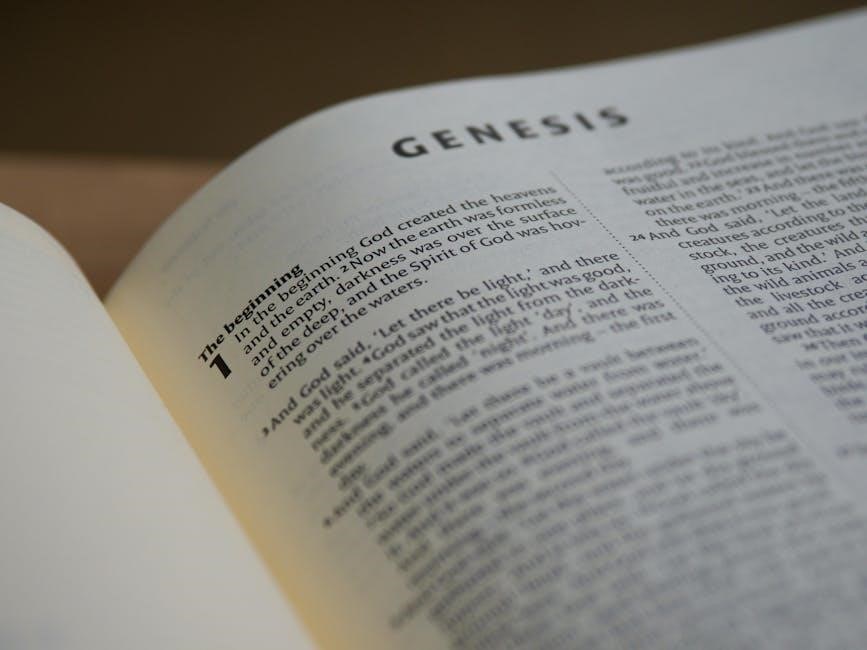
Genesis starkly portrays the introduction of sin into the world through the disobedience of Adam and Eve, initiating a cycle of brokenness and separation from God. This pivotal event, known as the Fall, isn’t simply a historical account but a profound exploration of human nature and the consequences of rebellion. However, even amidst judgment, Genesis hints at a promise of redemption.
The narrative doesn’t end with the Fall; instead, it lays the groundwork for God’s redemptive plan. Examining the story of Cain and Abel reveals the escalating consequences of sin, yet God’s mercy persists. Study guides emphasize that God initiates a path toward restoration, foreshadowed in the covenant with Noah after the flood. Through careful commentary, like those found in Syktyvkar study materials, we see God’s unwavering commitment to reclaiming humanity despite its failings.
C. God’s Sovereignty and Creation
Genesis emphatically establishes God as the ultimate sovereign Creator, meticulously detailing the six days of creation and declaring its goodness. This isn’t merely a cosmological account; it’s a theological statement affirming God’s power, order, and intentionality. Study guides highlight how the creation narrative demonstrates God’s complete control over all things, from the vast cosmos to the intricate details of life.

Commentaries, such as those by Ekkehardt Mueller on Genesis 1:26-27, delve into the significance of humanity being created “in the image of God,” reflecting His attributes. Examining Genesis through a historical and cultural lens, referencing Ancient Near Eastern literature, reveals the uniqueness of the biblical creation account. It underscores God’s transcendence and distinguishes Him from the gods of surrounding cultures, solidifying His absolute sovereignty.

V. Genesis in Historical and Cultural Context
Understanding Genesis requires examining its context within Ancient Near Eastern literature, revealing unique theological perspectives and challenging prevailing cultural narratives.
A. Genesis and Ancient Near Eastern Literature
Exploring Genesis alongside ancient Near Eastern texts—like Mesopotamian creation myths (Enuma Elish) and flood narratives (Epic of Gilgamesh)—reveals both striking similarities and crucial differences. These parallels suggest a shared cultural milieu, yet Genesis distinctly presents a monotheistic worldview, emphasizing God’s sovereignty and intentional creation.
Comparative analysis highlights Genesis’s unique emphasis on a benevolent creator, a moral God, and the special status of humanity created in His image. Unlike polytheistic accounts, Genesis portrays creation as a deliberate act of divine will, not a result of cosmic conflict. Studying these ancient texts illuminates the distinctive theological contributions of Genesis, showcasing its innovative and transformative message within its historical context.
B. Philo of Alexandria’s Commentary on Genesis
Philo of Alexandria, a 1st-century Jewish philosopher, offered profound allegorical interpretations of Genesis, blending Jewish tradition with Greek philosophical thought. His commentary doesn’t focus on literal historical details but seeks deeper spiritual meanings within the text. He viewed Genesis as a symbolic representation of philosophical and ethical principles, exploring concepts like the divine Logos and the nature of virtue.
Philo’s work, particularly “On Abraham,” uniquely presents Genesis’s core content, offering insights into his interpretive method. Studying his commentary reveals a Hellenistic Jewish perspective, enriching our understanding of Genesis’s reception in antiquity and its enduring influence on theological discourse. It provides a valuable lens for exploring the text’s multifaceted layers of meaning.

VI. Studying Genesis: Resources and Approaches
Numerous commentaries, study guides, and university resources—like those from Syktyvkar State University—facilitate in-depth exploration of Genesis’s narratives and themes.
A. Commentaries on Genesis
Exploring Genesis benefits immensely from utilizing comprehensive commentaries. Westermann’s commentary on the Joseph narrative, concluding his three-volume Genesis work, is highly regarded and now available in English. These resources offer detailed analysis of the text, historical context, and theological implications.
Serious students of the Old Testament will find such commentaries invaluable, providing insights into the original languages, cultural nuances, and literary structures. They aid in understanding the complex narratives and themes present within Genesis, such as creation, the fall, and the patriarchal stories.
Furthermore, commentaries often engage with differing interpretations and scholarly debates, fostering a more nuanced and informed reading of the text. They are essential tools for both academic study and personal devotion.
B. Study Guides and Discussion Questions
Effective study of Genesis is greatly enhanced by utilizing dedicated study guides. These resources, like those covering Genesis chapters 1-11, provide key themes and thoughtfully crafted discussion questions. They facilitate a deeper engagement with the text, prompting reflection on its meaning and relevance.

Such guides often summarize pivotal events – creation, the flood, the Tower of Babel – and explore their theological significance. They encourage critical thinking about God’s character, humanity’s relationship with Him, and the origins of sin and redemption.
Moreover, study guides can be used individually or within group settings, fostering vibrant discussions and shared insights into this foundational biblical book.